Sump Pump Installation
The mechanical piece that actually gets water out of your home — sized and installed correctly.
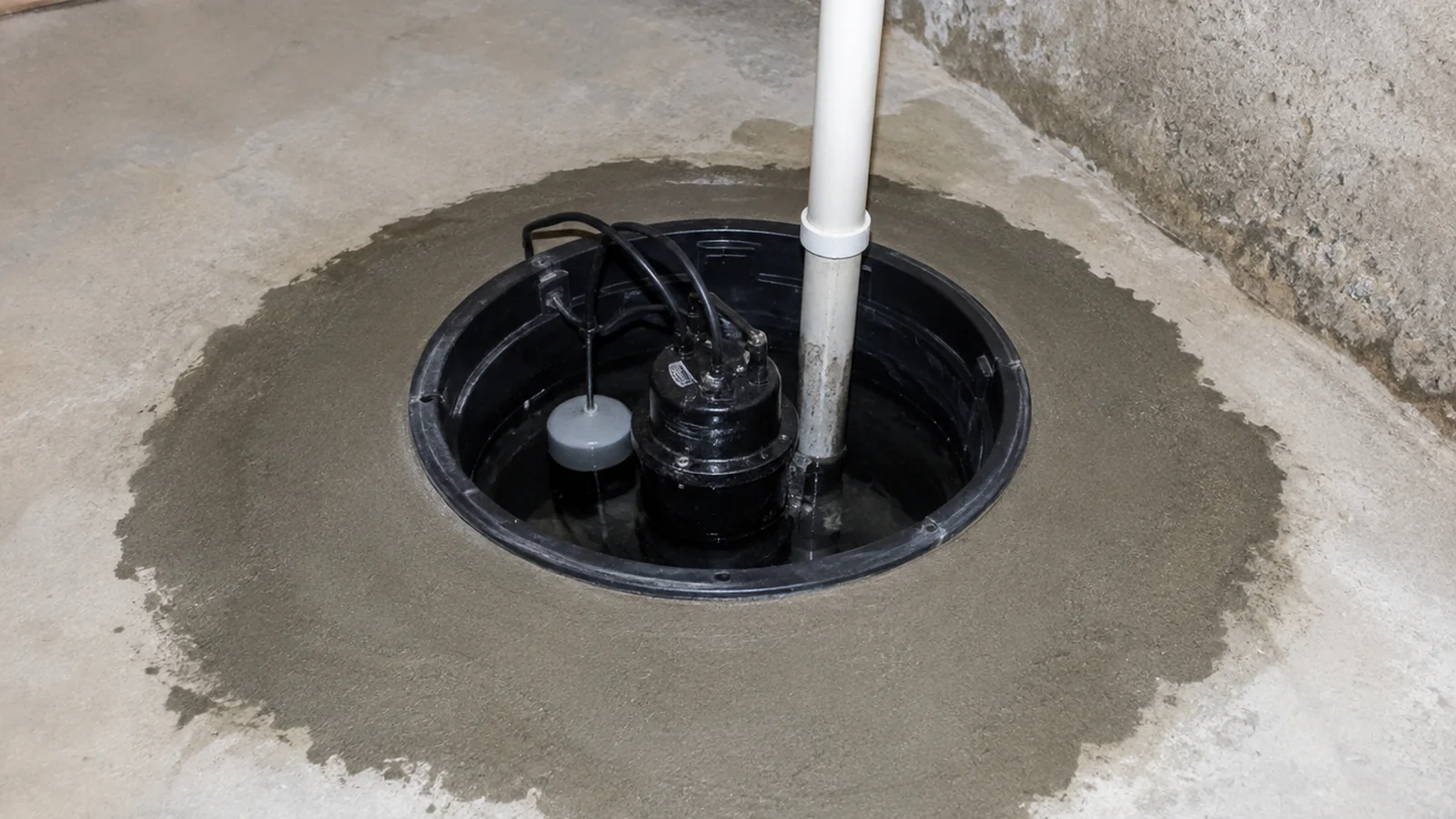
A sump pump sits in a basin cut into the lowest point of your basement floor and removes groundwater before it can rise into the living space. Water collected by gravity — from soil around the foundation, a connected interior drain, or a rising water table — flows into the pit, and a float switch triggers the pump to send it out through a discharge line, away from the house.
The pump itself is a fairly simple, well-proven piece of equipment. Most sump failures we see in this area come down to sizing and setup: a pump undersized for the volume of water a particular lot produces, a discharge line that dumps water right back next to the foundation, or a system with no backup for when the power goes out during exactly the kind of storm that causes flooding in the first place.
Because Michigan’s spring thaw and heavy-rain seasons often bring power outages at the same time as peak water volume, a battery backup pump (or a water-powered backup where local plumbing code allows it) is worth serious consideration rather than an afterthought.
You may need this if…
- Water already pools on the basement floor during heavy rain or snowmelt
- Your existing pump runs constantly, short-cycles, or has failed before
- You’ve never had a sump system and your basement has taken on water at least once
- You’re finishing a basement and want to protect the investment before drywall goes up
- Your current pump has no battery backup and you’ve lost power during a storm before
How Sump Pump Installation Works
Sizing the System
Calculate expected water volume based on soil type, lot grading, and square footage, then size the pump’s horsepower and the basin’s capacity to match — an oversized or undersized pump both cause problems.
Basin Installation
Cut and excavate a pit at the lowest point of the floor, set a sealed sump basin so gases and radon aren’t drawn up through gaps, and position it to receive water from any connected drain lines.
Pump, Float Switch & Check Valve
Install the primary pump with a properly adjusted float switch and a check valve on the discharge line, so water can’t drain back into the pit between pump cycles.
Discharge Line & Backup
Route the discharge line well away from the foundation, and install a battery backup or high-water alarm so the system still works if the power goes out mid-storm.
What It Typically Costs
A primary pump and basin typically runs roughly $1,200–$2,500 installed; adding a battery backup system generally brings the total closer to $2,500–$4,500. The right number for your home depends on pit depth, discharge routing, and backup type — get it in writing before work starts.
Full Cost Guide →Common Questions
How long do sump pumps last?
A quality submersible pump typically lasts 8–12 years with normal use. If yours is older than that, or you don’t know its age, it’s worth having it evaluated rather than waiting for it to fail during a storm.
Do I need a battery backup?
If you’ve ever lost power during heavy rain — which happens regularly in West Michigan — a backup system is the difference between a dry basement and a flooded one at the exact moment you need the pump most.
Can I just add a pump without an interior drain?
Yes, a standalone sump system is common, especially for a lot with a naturally rising water table rather than wall seepage. An honest inspection will tell you whether your situation calls for a pump alone or a pump paired with a drain.
What’s the difference between a battery backup and a water-powered backup?
A battery backup runs off a charged marine-style battery and works regardless of your water supply. A water-powered backup uses household water pressure and never needs recharging, but isn’t allowed everywhere — local code and water pressure determine whether it’s an option for your home.
Related Services
Get a Free Basement Inspection
Tell us what’s going on and we’ll get back to you with next steps — no obligation, no pressure.
- In-person inspection, not a guess from a phone call
- A written, itemized quote you can actually compare
- No fake urgency — we’ll tell you honestly what can wait