Foundation Crack Repair & Wall Stabilization
Not every crack is the same — treating them the same way is how small problems get expensive.
Poured concrete and block foundations both crack — it’s a near-universal reality of how concrete cures and settles, and most hairline cracks are cosmetic. The distinction that actually matters is whether a crack is actively leaking, whether it’s widening, and whether it’s tied to a structural issue like a bowing wall from hydrostatic pressure. Those three questions determine whether a crack needs a simple injection, a more involved repair, or full wall stabilization.
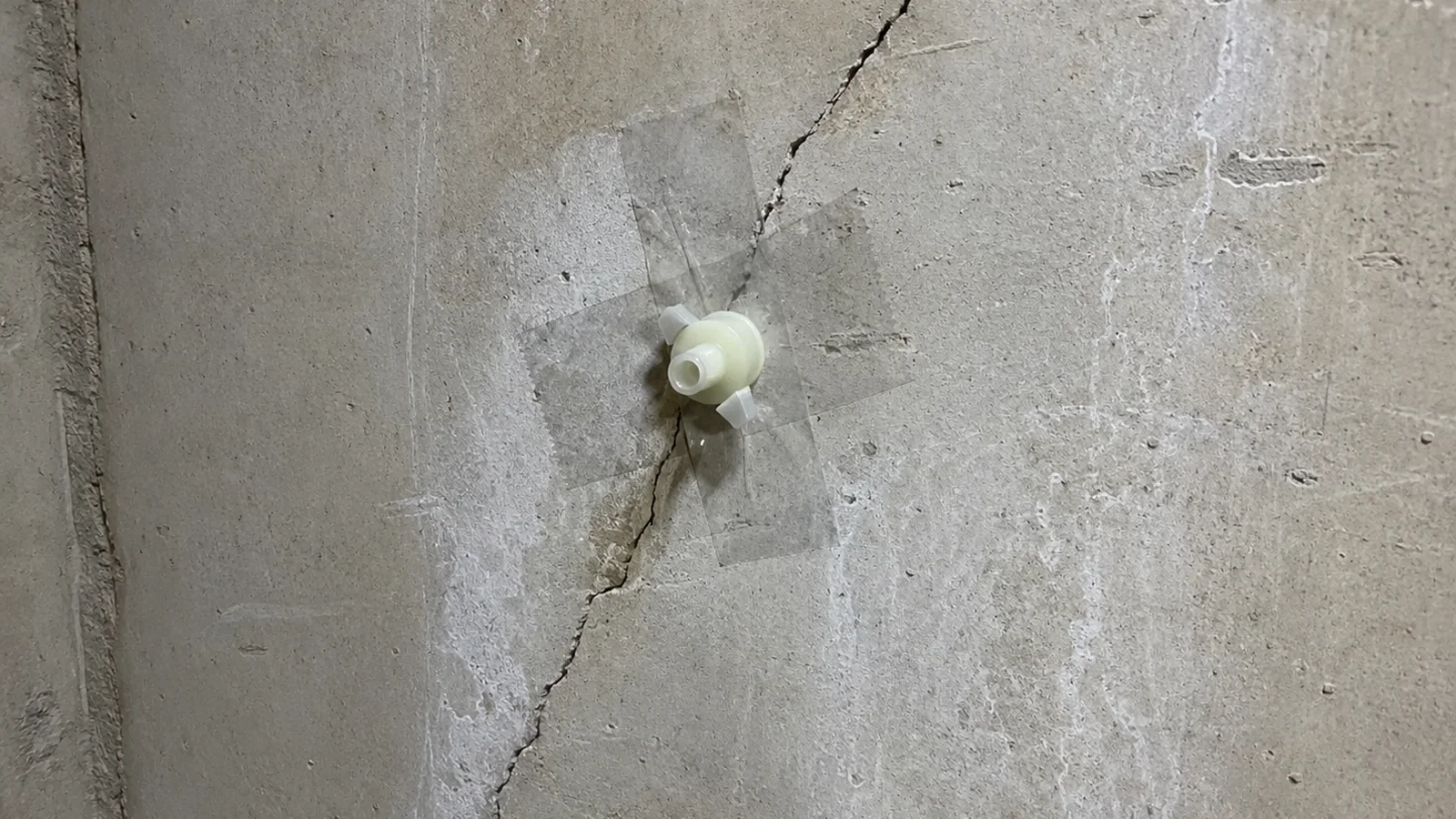
For a leaking non-structural crack, polyurethane or epoxy injection is the standard fix: the crack is cleaned, ports are set along its length, and resin is injected under pressure so it fills the crack from the inside out — including hairline branches a surface patch would never reach. Polyurethane flexes slightly with the concrete and is generally preferred for actively leaking cracks; epoxy bonds rigidly and is used more for structural crack repair.
A bowing or inward-leaning wall is a different category of problem. It means hydrostatic pressure has been pushing on the wall long enough to deform it, and injection alone won’t address that. Stabilization methods include steel wall anchors, carbon fiber straps, or, for more severe cases, wall replacement — and any of those decisions should follow a proper structural evaluation, not a sales pitch.
You may need this if…
- A crack is actively leaking or has visible white mineral staining running from it
- A crack is wider than a hairline, or you can see it’s grown since you last checked
- A wall has a visible inward lean or horizontal cracking (a strong sign of hydrostatic pressure)
- A step-pattern crack in a block wall, which often indicates settling rather than pressure
- A door or window near the foundation has started sticking, which can indicate wall movement
How Foundation Crack Repair & Wall Stabilization Works
Assessment
Identify whether a crack is cosmetic, actively leaking, or tied to wall movement, and measure any bowing before recommending injection versus stabilization.
Surface Prep & Port Placement
Clean the crack, seal the surface, and set injection ports along its length at regular intervals so resin reaches the full depth.
Low-Pressure Injection
Inject polyurethane or epoxy resin through the ports under controlled pressure until it’s visible exiting the next port, ensuring the full crack is filled rather than just the surface.
Wall Stabilization (if needed)
For a bowing wall, install steel anchors or carbon fiber strapping at engineered intervals to arrest further movement, based on the specific evaluation of that wall.
What It Typically Costs
Simple crack injection typically runs $400–$1,500 per crack. Wall stabilization is priced per anchor point or per linear foot of wall and varies significantly with the severity of the bow — this is one where a firm, itemized quote after an in-person inspection matters more than any general number.
Full Cost Guide →Common Questions
Can I just fill a crack with hydraulic cement myself?
Surface patching can slow a leak temporarily but rarely stops it for good, since it doesn’t fill the crack’s full depth or account for future movement. It’s a reasonable stopgap, not a permanent fix.
Is a bowing wall dangerous?
It’s a structural issue that gets more expensive to address the longer it’s left, since ongoing pressure continues to move the wall. It’s worth an in-person evaluation rather than guessing from a photo.
Will injection stop the crack from ever leaking again?
A properly filled crack should stop leaking through that specific crack. It doesn’t address the broader hydrostatic pressure causing new cracks elsewhere — that’s a drainage question, which is why crack repair and drainage work are often recommended together.
How do I know if a crack is structural?
Width, direction, and whether it’s paired with wall movement (bowing, leaning, sticking doors or windows nearby) are the main indicators. When in doubt, get it looked at in person rather than assuming either way.
Related Services
Get a Free Basement Inspection
Tell us what’s going on and we’ll get back to you with next steps — no obligation, no pressure.
- In-person inspection, not a guess from a phone call
- A written, itemized quote you can actually compare
- No fake urgency — we’ll tell you honestly what can wait