French Drain vs. Sump Pump: What's the Difference?
These two get confused constantly — understandably, since they're often installed together. Here's what each one actually does.
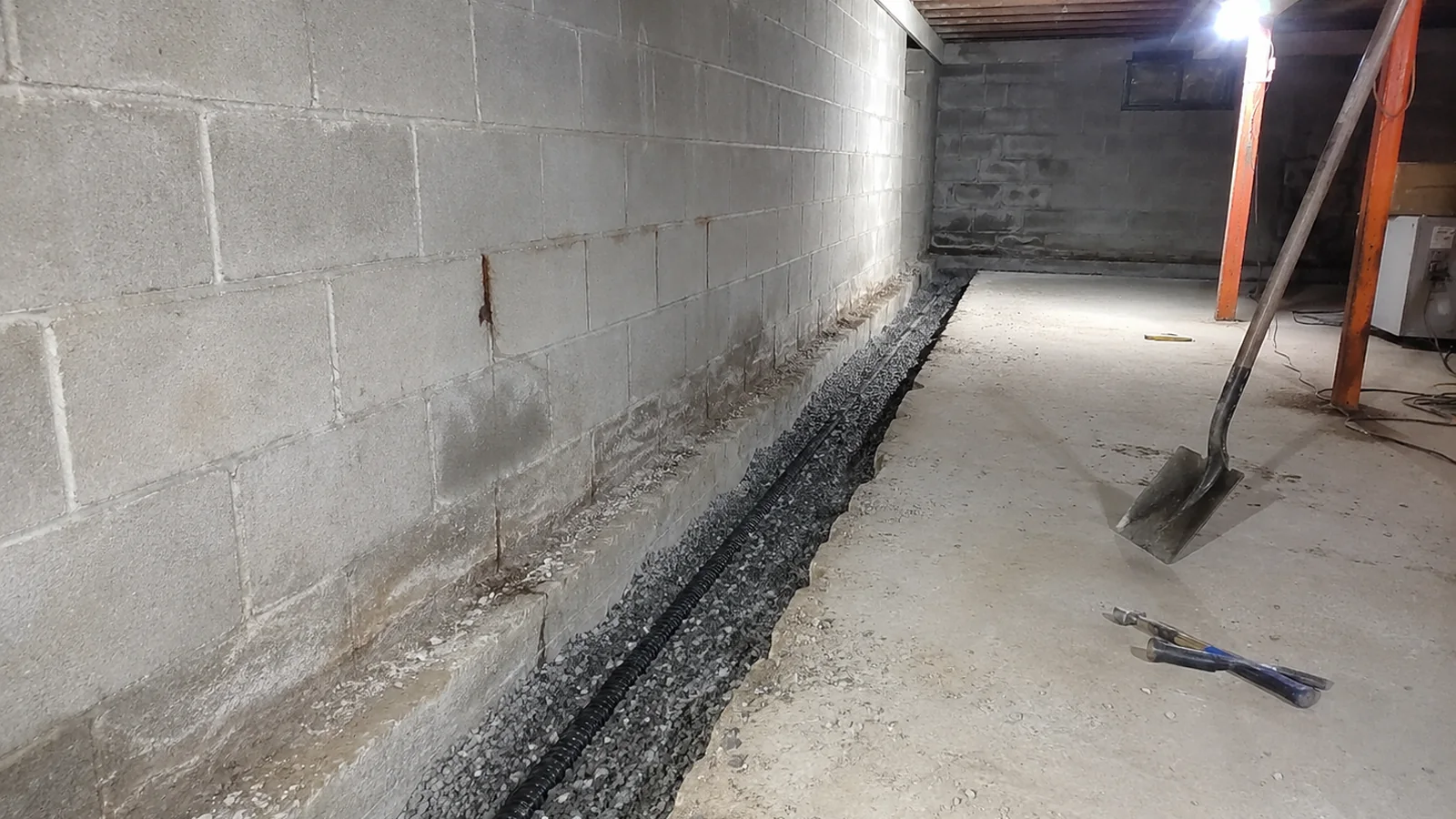
A French drain manages where water goes. A sump pump gets it out of the house entirely. They solve related but genuinely different problems, and for most Grand Rapids basements with floor-wall seepage, the honest answer is that you need both working together, not a choice between them.
| French Drain (Interior Drain) | Sump Pump | |
|---|---|---|
| What it does | Collects groundwater and channels it toward a low point using gravity | Actively pumps collected water out of the basement and away from the house |
| How it works | A perforated pipe bedded in gravel, run along the foundation's interior or exterior base | A submersible pump in a basin, triggered by a float switch as water rises |
| Best for | Ongoing seepage along the floor-wall joint from hydrostatic pressure | Removing water once it's been collected — by a drain, or from a naturally rising water table |
| Needs the other? | Yes, in almost every case — a drain needs somewhere to send the water it collects | Not always — a pump alone can handle a rising water table without a connected drain |
| Typical lifespan | 20–30 years; the main failure mode is silt clogging the pipe over time | 8–12 years for the pump motor itself; the basin and piping last much longer |
Why Most Systems Use Both
An interior French drain typically connects directly into a sump pump pit — that combination is the most common configuration installed, not two separate alternatives competing for the same job. The drain relieves the hydrostatic pressure causing cracks and seepage in the first place; the pump removes the water the drain collects so it doesn't just sit in the basin.
A sump pump installed without any drain can still remove water once it's already inside, but it does nothing to relieve the ongoing pressure against your walls. A French drain installed without a pump has nowhere to send the water it collects, unless your lot slopes enough to drain to daylight by gravity alone — which is uncommon.
When You Might Only Need One
French drain alone
Rare, but possible on a steeply sloped lot where collected water can drain to daylight by gravity without needing to be pumped.
Sump pump alone
Common when the issue is a rising water table or occasional groundwater intrusion through the floor, rather than ongoing seepage along the walls that a drain would relieve.
Common Questions
Which one should I get first if I can only afford one right now?
It depends on what's actually causing your specific water problem — which is exactly what an inspection is for. Installing the wrong one first can mean paying for the other one later anyway.
Can I install a French drain without a sump pump temporarily?
Technically, yes, but the collected water needs somewhere to go. Without a pump or gravity drainage to daylight, you're often just relocating the water problem rather than solving it.
Get a Free Basement Inspection
Tell us what’s going on and we’ll get back to you with next steps — no obligation, no pressure.
- In-person inspection, not a guess from a phone call
- A written, itemized quote you can actually compare
- No fake urgency — we’ll tell you honestly what can wait